Freemasons? There are 12 Grand Lodges at work in Croatia, and at least three of them are best avoided
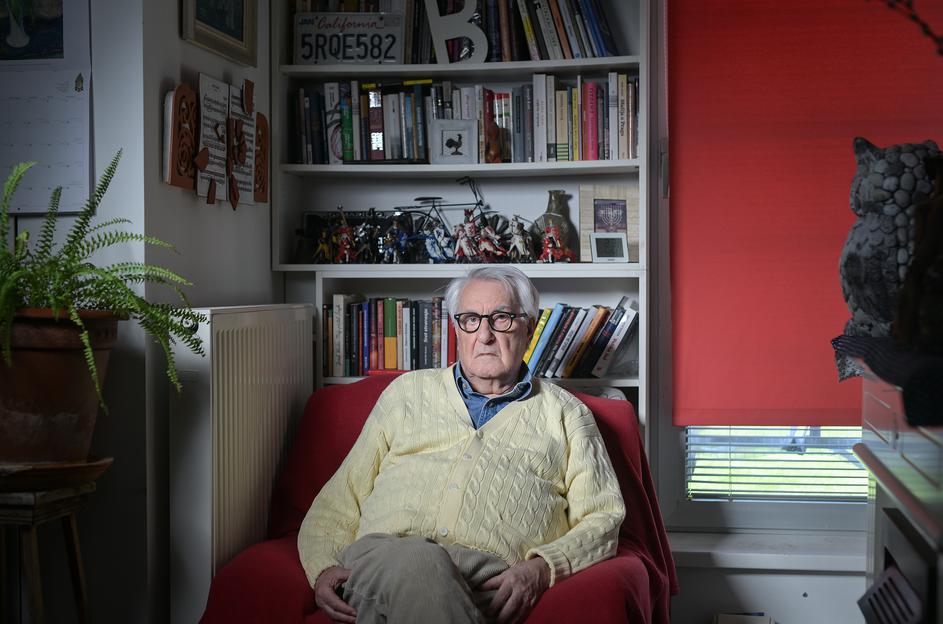
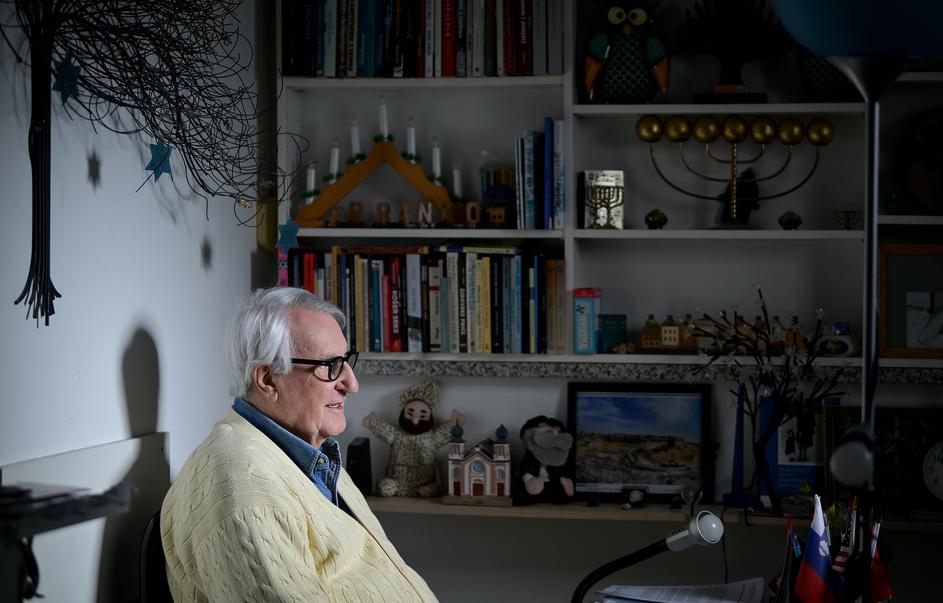
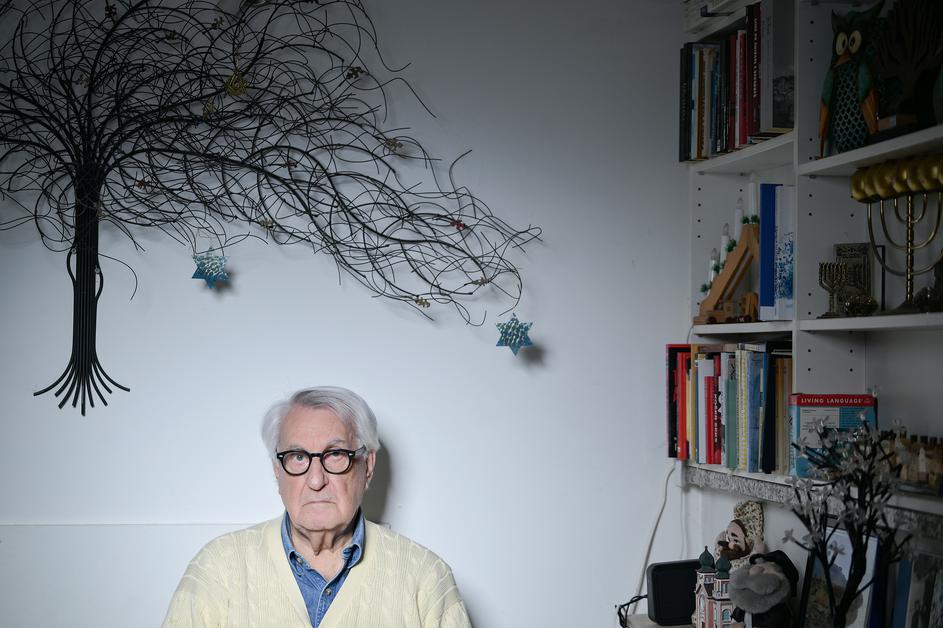
Branko Šömen (b. 1936) is a publicist, writer and screenwriter. His works of non-fiction available in Croatian include “Baršunasti snovi” (Velvet Dreams, 1990), a book on Vaclav Havel later reissued under the title “Češki sanjar” (The Czech Dreamer, 2012); “Atentat na Sarajevo, ratna antologija” (An Attempt on Sarajevo: A Wartime Anthology, 1992); “Amenkamen, slobodnozidarska čitanka” (Amenkamen: A Masonic Reader, 2001); “Mudrost, povijest slobodnog zidarstva u Hrvata, prvi dio” (Wisdom: A History of Freemasonry among the Croats, Part One, 2013); “Snaga, povijest slobodnog zidarstva, drugi dio” (Strength: A History of Freemasonry, Part Two, 2015); “Ljepota, slobodnozidarski leksikon, treći dio” (Beauty: A Masonic Lexicon, Part Three), with G. K. (2017); “Kamenamen, slobodnozidarska abeceda” (Kamenamen: A Masonic ABC, 2018); “Hiramova harfa, antologija poezije hrvatskih slobodnih zidara, mrtvih i živih” (Hiram’s Harp: An Anthology of the Poetry of Croatian Freemasons, Dead and Living), with I. G. (2020); “101 hrvatski slobodnih zidara koji su mijenjali Hrvatsku” (101 Croatian Freemasons Who Changed Croatia; Fraktura, 2025); and “Groblje svjetlosti, od slobodnog zidarstva do antimasonstva” (The Graveyard of Light: From Freemasonry to Anti-Masonry; forthcoming). We began our conversation with a question about a fruitful duality – his belonging to both Slovenian and Croatian culture.
BestBook: So – how, and why, Zagreb?
I came to Zagreb as a Slovenian writer and screenwriter. I had enjoyed a very successful collaboration with the director Rajko Grlić; together we wrote the screenplay for “Samo jednom se ljubi” (You Love Only Once), which became a cult film. I worked with Živojin Pavlović on the Slovenian film “Crveno klasje” (Red Wheat), wrote the screenplay for “Let mrtve ptice” (The Flight of the Dead Bird) and won the Golden Arena for best screenplay at Pula. My screenplays were also directed by the Slovenian directors Jože Babi, Boštjan Hladnik, Franci Slak and France Štiglic. Since 1985 I have been Radio Ljubljana’s cultural correspondent in Zagreb. It was a deliberate departure from Ljubljana, where my first marriage had fallen apart, and where in 1963, under the “anti-state propaganda paragraphs”, I had twice been held in remand prisons in Ljubljana, Murska Sobota and Maribor and sentenced to four months’ imprisonment for writing in the satirical magazine Bruc. I was immediately called up to the Yugoslav People’s Army, to a penal battalion at Gnjilane in Kosovo – but because of a chronic illness (hepatitis) the army would not take me.
BestBook: And how did a Slovenian find his feet in Zagreb?
Zagreb opened itself to me as a metaphor for a good old Central European city. At that time there were more than fifteen antiquarian bookshops in Zagreb. I made the rounds of them and came across odd issues of the monthly Šestar (The Compasses), in which, among the members of the Masonic Lodge Maksimilijan Vrhovac, I found several Slovenian intellectuals. That intrigued me, so I bought some of the rarer issues and began to read and to gather material on these men “of good repute”. At about that time Zoran D. Nenezić’s book “Masoni u Jugoslaviji” (Masons in Yugoslavia) appeared, as did Ivan Mužić’s “Masonstvo u Hrvata” (Masonry among the Croats). It so happened that Vjesnik’s Belgrade correspondent, the journalist Radmila S., came to Zagreb on a visit with a friend of hers. That friend was Zoran D. Nenezić. He was delighted to learn that I had read his book, and asked me what I made of it. I replied that everything was clear: that Freemasonry had been banned first by Fascism, then by Nazism and finally by Communism, and that after the Second World War all the national Lodges in the new Yugoslavia had been prohibited. Zoran told me with some pride that he was working to bring Freemasonry back home. Two years later he telephoned and asked whether I wished to become a Freemason. I agreed. As I happened at that very moment to be at the Cannes Film Festival, he suggested that I come to Paris and join a French Lodge (of the GOF). I became a Freemason on 10 May 1990.
BestBook: A bold avowal! But it did not stop at mere membership of a Lodge?
I began to gather material – articles on Freemasonry. After the fall of the Berlin Wall it was chiefly Czech, Slovak and Polish journalists who wrote about it. The Serbs used the term “masoni”, whereas the other European nations used “slobodni zidari” – free masons – which is the more correct. Although in many countries “mason” serves as a shorter form of “freemason”, it never took root with us, for it carries a certain unease: it conjures up political conspiracies and brings with it thoughts of biased criticism, baseless accusations and persecution.
BestBook: How did your life proceed in your new surroundings, once you had left what Freemasons would, I believe, call the profane waters?
Most things in life I have come by the hard way, with ideological spokes thrown into my wheels. Zoran D. Nenezić, the self-styled Grand Master of the Grand Lodge of Yugoslavia, did not take kindly to my idea that, after the break-up of Yugoslavia, we ought to found Grand Lodges in Croatia and Slovenia. He expelled me from the Grand Lodge of Yugoslavia. As we had established good fraternal relations with the Austrian Freemasons – the engineer Čedomir Kirchner spoke excellent Croatian and Slovenian – we first founded the deputation Lodge Illyria, which received into its ranks, alongside the Austrian Brethren, the first Slovenian and Croatian candidates. Lodge Illyria thus worked in three languages – German, Croatian and Slovenian – and on its altar lay three sacred books: the Bible, the Qur’an and the Talmud. Before long we had organised three independent Lodges each in Slovenia and in Croatia, and so fulfilled the conditions for the founding of the Grand Lodge of Croatia and the Grand Lodge of Slovenia.
BestBook: How might Freemasonry best be defined?
It is of great significance that the publishing house Fraktura has translated Michael Weninger’s book “Loža i oltar” (Lodge and Altar). One of the first sentences in the book (which runs to almost 600 pages), and one likely to intrigue the reader, is this: “Freemasonry is a way of life.” The author rediscovers and confirms that in Freemasonry – and so in life – man himself is the greatest mystery. His duty is to know himself: to “look within himself”, to “look about himself” and to “look above himself”. It is a lofty demand, to work upon oneself in order to become a better man. “Every Freemason therefore assumes, as his own wholly personal and free decision, the obligation to strive for truth, for love of his fellow man, for self-criticism and knowledge, and for tolerance.” Weninger shows himself to be an excellent connoisseur of Masonic philosophy. With meticulous care and perfectionism – as a priest he was granted access to the Vatican Library and Archives – he has analysed why the Catholic Church in the past fought against Freemasonry, obstructed its development in Europe (less so in America), and sought to break up Masonic collectivism, humanism and brotherhood.
BestBook: And so, a Slovenian, you have become the foremost chronicler of Freemasonry among the Croats.
The well-known Slovenian poet Janez Menart declared, back in the days of Yugoslavia, that the world on the far side of the river Sutla held no interest for him. My own road led me precisely across the Sutla, to Zagreb. Like most Slovenians I knew little about Croatia, so I resolved to get to know the world and the people among whom I lived. Entering Freemasonry opened to me the doors of various European institutions, where I found a wealth of material on Freemasonry in Croatia and in south-eastern Europe. First I wrote a book on Slovenian Freemasonry, “Molčeče nevidno bratstvo” (The Silent Invisible Brotherhood); its motto was a quotation from Albert Pike: “What we have done for ourselves alone dies with us. What we have done for others and the world remains and is immortal.” At the same time my Masonic reader in Croatian, “Amenkamen”, appeared; it has since run to three editions. As I went on gathering material for a history of Croatian Freemasonry, I discovered that the Croats possessed an exceptional Masonic tradition – from Count Kazimir Drašković of Trakošćan, his sons and grandsons, through a great many priests (more than forty of them!), among them two bishops, Galjuf and Vrhovac, to a score of Croatian painters and sculptors (Čikoš Sesija, Meštrović, Kljaković, Krizman, Tartaglia…) and several members of the Croatian Academy of Sciences and Arts. Freemasonry among the Croats is a parallel, comparative history running alongside official Croatian history. It reveals the links between those in power and private individuals, and the influence of certain parties on the politics of the inter-war years; it shows how the agreement on the pre-war Banovina of Croatia was signed by six eminent experts – three from Belgrade (Dr M. Konstantinović, Dr M. Ilić, Dr D. Tasić) and three from Zagreb (Dr I. Krbek, Dr I. Šubašić, Dr J. Šutej) – every one of whom was a Freemason from one or another Serbian or Croatian Lodge, a fact that to this day not a single Croatian historian has noticed! That agreement was endorsed by the then Ban of the Sava Banovina, Dr Stanoje Mihaldžić, likewise a Freemason. There were many such accords and agreements in Croatian history. Two of the regents for the under-age King Peter II, the Croat Ivo Perović and the Serb Radenko Stanković, were Freemasons (as, indeed, was Prince Paul Karađorđević). All these facts were intriguing; they opened up a suppressed picture of Croatian political and cultural life. The fruit of many years of research was three books: “Mudrost, povijest početaka slobodnog zidarstva u Europi i u tadašnjoj Austro-Ugarskoj Monarhiji” (Wisdom: a history of the beginnings of Freemasonry in Europe and in the Austro-Hungarian Monarchy of the day); “Snaga” (Strength), an introduction to Freemasonry between the two wars; and the third, “Ljepota” (Beauty), a lexicon of deceased Croatian Freemasons – more than 1,900 of them.
BestBook: And yet one has the impression that a section of the Croatian public would sooner write off their Freemason compatriots – among whom were prominent figures of culture and public life.
The first ordinary (military) Lodge in these parts arose at Glina (1759), and Serbian as well as Croatian officers sat in it. The first Grand Lodge among the Croats came into being as early as 1775. The book “101 hrvatskih slobodnih zidara koji su mijenjali Hrvatsku” is a selection of those Freemasons who – as architects, scientists, academicians, painters and sculptors, physicians, inventors… – shaped the development of Croatian culture, particularly between the two world wars. One has only to stroll through the centre of Zagreb to see the symbols of Freemasonry, and the buildings, palaces and institutions erected by Freemason architects. Still standing in Zagreb – though falling into ruin – is the first Masonic Temple, in which the Enlightenment Lodge Mudrost (Wisdom), founded in 1773, held its Labours. Its first Worshipful Master was Archbishop Josip pl. Galjuf, and its Secretary Archbishop Maksimilijan Vrhovac. Among those who worked in it were Antun Kukec, professor at the Royal Academy in Zagreb; Ivan Nepomuk Oršić, Postmaster-General of the Kingdom of Croatia, Slavonia and Dalmatia; Count Petar Ivan IV Troilos Sermage, Imperial and Royal Chamberlain; Nikola pl. Škrlec Lomnički, Supreme Director of all schools in Croatia; Ignacij pl. Verbega, doctor of medicine; and others. The Temple built before the First World War in Nazorova Street still stands. In Osijek, Lodge Budnost (Vigilance) has resumed its work in the Art Nouveau Urania cinema hall; in Rijeka the symbolic interior furnishings of Lodge Sirius remain intact to this day…
BestBook: That was then. And now?
Before the Second World War the Masonic monthly Šestar was published in Zagreb. Masonic activity was an invisible presence in Croatian public life. A few months after the formation of the Independent State of Croatia, more than forty Freemasons – mostly intellectuals, among them the academician Dr Grga Novak, the writer Dr Antun Barac, the painter Jozo Kljaković, the sculptor Ivan Meštrović and the Slovenian veterinarian Dr Fran Zavrnik – ended up in Jasenovac and Stara Gradiška. They remained there until the spring. After the war some of them were imprisoned again, and some even liquidated. After the fall of the Berlin Wall Freemasonry returned to Central Europe – first to Yugoslavia, and then to Croatia and Slovenia. Today Grand Lodges with 400 or more members each are flourishing in both countries.
BestBook: How do Freemasons themselves see their mission?
Very early on, at the time of the founding of the Grand Lodge of Czechoslovakia in 1991, I met eminent Freemasons of world standing. In Prague I spoke with C. Fred Kleinknecht, Grand Commander of the Scottish Rite’s Southern Jurisdiction in the United States. In my first Masonic reader, “Amenkamen”, I published the reflections he delivered in Istanbul in 2001. There he said, among other things: “We Freemasons must defend the human worth that is measured not in money but in the greatness of the human soul. We must teach that honour is worth more than dishonesty, that hatred is always wrong, that fear is always destructive, and that those who spread hatred and fear are always evil. And to the question of what our vision and our mission is, the answer is – Freemasonry! It is not the government. It is not the school system. It is not political parties or organisations. It is, sadly, less and less the family. Nor is it the Church. History is full of appalling examples of what can happen when a religion is allowed to impose its view absolutely. We are the teachers and guardians of those personal and social values to which humanity must in time return if it is to survive. We must bring Ordo ab Chao – order out of chaos.” It is remarkable how many wise, intelligent and sincere thoughts Croatian Freemasons, too, set down in the past. Dr Stanko Švrljuga, a member of Lodge Pravednost (Righteousness), wrote in 1923: “Our programme is as old as Freemasonry itself is old. It is as new as every beauty is ever new.” The Secretary of that same Lodge wrote in 1925: “Freemasonry is an order of knights – not by the nobility of the Brethren’s blood, but by the inner harmony of the Masonic organisation and the moral quality of its members. That is why Freemasonry is eternal, and the future is its own.” Veljko Tomić, Grand Master of the Symbolic Grand Lodge Libertas in the Orient of Zagreb, wrote in 1928: “Our course in Freemasonry is exclusively the cult of the human soul. Freemasonry exists for the sake of man; to him it devotes all its care, its liturgy and its symbolism; it places man at the centre of its entire social ideology, and indeed at the centre of the universe itself. Therein lies the depth of its philosophy, for what is ours is individual.” Ilija Mamužić, a member of Lodge Budnost in the Orient of Osijek, wrote in 1936: “To be a Freemason means nothing other than to strive, by one’s deepest instinct, for the fullest and most many-sided personal perfection, and for a more harmonious building of the world.” Dr Oskar Tartaglia, a member of Lodge Pravda (Justice) in the Orient of Split, set down long ago – even before the First World War – a lucid political thought: “The homeland lies not in Parliament but in the people.”
BestBook: And yet relations between the Masonic world and the so-called profane world have not always been idyllic.
In the past, Croatian Freemasons had to fight for their survival, their activity and their advancement under pressures of many kinds – not only from the Church, but from Fascism, Nazism and Communism. I have written a book entitled “Groblje svjetlosti” (The Graveyard of Light), subtitled “Od slobodnog zidarstva do antimasonstva” (From Freemasonry to Anti-Masonry), which attempts to set a part of Croatian history in objective perspective: on the one side the largely tragic role of official politics, and on the other the persecuted societies – Freemasonry among them – whose ideals were humanism, secularity and unity. In it I posed the opposite question to Weninger’s: why and how Freemasons throughout the world – and that includes our own country – fought against Church dogma, Fascism, Nazism and Communism.
BestBook: There are many fascinating characters. Although it is difficult, and even unfair, to single anyone out, is there an exemplary – or at least especially colourful – biography of a Croatian Freemason?
Among the biographies of Freemasons, the life of Tomo (Bassegli) Basiljević (1756–1806) is particularly interesting. He was the leading representative of the Enlightenment in Dubrovnik. He left early to study law in Bern and travelled across Europe: in Germany he was received by Frederick II the Great (a Freemason), in Austria he was granted an audience with the Emperor Joseph II, and he became the son-in-law of Ignaz von Born, Master of one of the most influential Viennese Lodges. Basiljević wrote in French, and his writings reveal thoughts that were radical for their time – inspired reflections under the title “Florilegium”. His longish essay “Thoughts on the French Revolution in Europe and in Dubrovnik” is well known. In it he addresses an unnamed gentleman and asks him, among other things: “Put your hand on your heart, Sir, and tell me, as an honest man yourself, whether you believe that our government (leaving aside for a moment the governments of the rest of Europe) is good, just and reasonable? Whence, then, comes all the evil that flows from it, if not from a bad constitution of the state, from a hereditary aristocracy, by which the nobility would be compelled to govern their land better?” In the same text, speaking of honest men, he adds that he confesses to belonging to that breed of men himself – that he is a Freemason. In a book by the Viennese professor of history Gunter K. Kodek (a Freemason) I found records that Basiljević had been received into the fellowship of Freemasons in Basel, and that in 1785 he was raised a Master in the Viennese Lodge Zur Wahren Eintracht (True Concord). His writing thus becomes logical, and his social engagement beyond question. He died in 1806 in very strange circumstances. A great Francophile, he rode out to meet the French as the liberators of Dubrovnik. His encounter with General J. J. Molitor above Slano came as a shock to him: the commander ordered him to dismount and return to Dubrovnik on foot – a distance of some 30 kilometres. The next morning he was found dead in his bed. His last words are said to have been “Be a man!” So Croatian Freemasons lived and worked in the past, and so they work and think today. Once they were feared, but also respected; today they are ignored in circles not equal to open thinking, to telling good from evil, the useful from the harmful, the beautiful from the ugly. Though they were never a religious sect or a political party, they have survived the centuries, from the first foundation stone laid in the London Temple in 1717. Today Croatian Freemasons command respect: the Grand Lodge of Croatia (some of whose Lodges meet regularly and successfully in Zagreb, Rijeka, Varaždin, Osijek and Split) is recognised by 137 regular Grand Lodges around the world and has been received into the worldwide chain of the Masonic Brotherhood.
BestBook: When you speak of regular Grand Lodges, these are, if I am not mistaken, the ones recognised by the United Grand Lodge of England. There are also some at work in this country whose status is, to say the least, undefined.
It is well known that the United Grand Lodge of England (UGLE), “the mother of all Lodges”, has of late recognised Lodges that work other Rites and do not adhere strictly to Anglophone rules and principles – the liberal (Latin) current of Freemasonry. It is astonishing that today no fewer than twelve Grand Lodges are at work in Croatia; some of them are exclusively for women, others mixed, and at least three of them are best avoided, for it happens that “men of good repute” find their way into the wrong, unrecognised Lodges. The profanity of an unsettled European geopolitics affects the work of individual lawful and “secret” societies too. In place of idealistic Light it brings an indestructible darkness into our midst, and seeks to exchange the good in man and in society for destructive egoism and evil.
BestBook: Finally, how does a Freemason today view the world we live in?
The artists Ivan Meštrović and Jozo Kljaković, the publicist Josip Horvat and other Freemasons thought and wrote critically about Europe. Intimidation and bans notwithstanding, Freemasonry has endured, and after the fall of the Berlin Wall it returned to Central Europe – to Belgrade, and soon afterwards to Ljubljana and Zagreb. Politics is no longer well disposed towards small political parties, towards democratically minded societies, towards public and “secret”, official and unofficial movements, towards different ways of looking at the world around us: it seeks cold control over society, it wants to stand above that same society, it wants to rule. And in this chaos of wanting and being able, Croatian Freemasonry too has found itself like a fish out of water – an ideal picture of social turmoil, optimistic aspirations and organisational adversities. It is a good thing that there are still people who, though disillusioned with political systems, still believe in “the good, honest, righteous man” and seek like-minded souls with whom to build a different and better society.
Source: 24sata.hr / Antun Pavešković
Photographs: Pixsell / Sandra Simunovic