Interview with the Most Worshipful Brother Thierry Zaveroni, Grand Master of the Grand Lodge of France
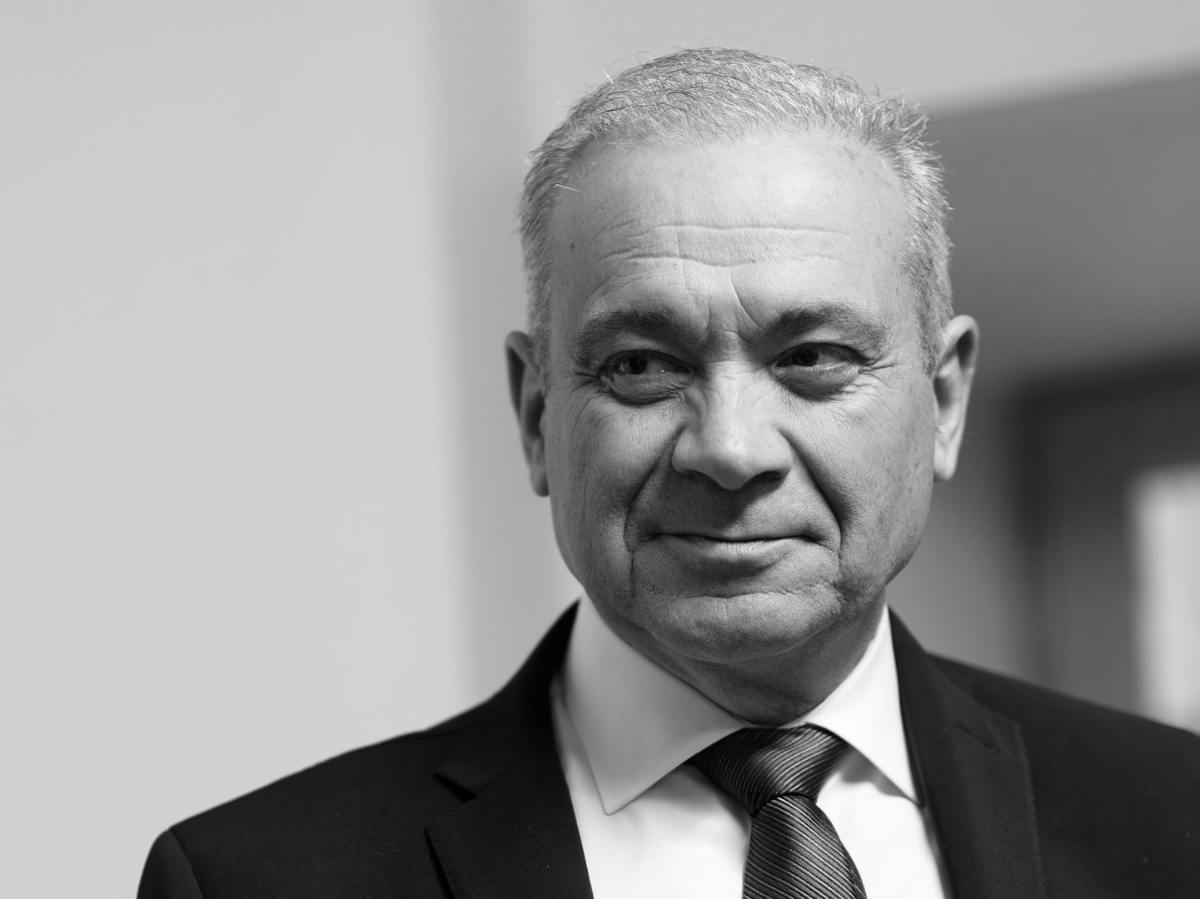
Born in 1961, Thierry Zaveroni has devoted his life to service: first to his country, in the French Navy and the prestigious Marseille Naval Fire Battalion, and then to Freemasonry, into which he was received in Marseille in 1985. Since his election to the head of the Grand Lodge of France in 2022, he has given voice to a Masonry that is clear, fraternal and exacting – faithful to tradition, yet deeply rooted in the challenges of our time. In this interview he answers the questions of an international readership keen to understand better the role, the vision and the present concerns of the Grand Lodge of France.
What has your Masonic journey looked like – from your initiation in Marseille in 1985 to the present day?
I was initiated in 1985 in the Lodge “Stella Maris” in Marseille. The name of that Lodge, an allusion to the mariners’ star, has left a deep mark on my path: it has always reminded me of the need for a bearing, for an inner light amid the darkness of uncertainty. It was a school of rigour, of silence and of transformation. There I held every office up to that of Worshipful Master, before being called to serve the Obedience at national level. I sat on the Federal Council and served several terms as First Deputy Grand Master, before being elected Grand Master in June 2022. This office is neither a power nor a privilege. It is a mission of service and of transmission. Each day it calls upon me to embody fidelity to the Rite, the humility of listening and the depth of the fraternal bond.
On what foundations is the Grand Lodge of France (GLdF) built, and what distinguishes it from others?
The Grand Lodge of France is an initiatic Obedience that works exclusively in the Ancient and Accepted Scottish Rite. Its identity rests on spirituality, symbolic tradition, humanism and freedom of conscience. What sets it apart is its fidelity to an exacting ritual, the invocation of the Great Architect of the Universe and the depth of the inner journey. We are neither a philosophical circle nor a charitable society, but a true school of self-transformation.
Our practice rests upon the Three Great Lights of Freemasonry – the Volume of the Sacred Law, the Square and the Compasses – which are present in every one of our Lodges. Each Brother works “to the glory of the Great Architect of the Universe”, the interpretation of which is left to the sensibility and conscience of every individual. This absolute freedom of conscience allows each person to progress in keeping with his own spiritual, philosophical or religious convictions.
We reaffirm our attachment to the principles laid down at the Convent of Lausanne in 1875: respect for Tradition, the exclusion of political and religious controversy from our Labours, the search for Truth, mutual tolerance and active solidarity. This fidelity to traditional Freemasonry goes hand in hand with an openness to contemporary challenges: through the Questions for Study set to the Lodges, our Lodges today work on subjects such as the end of life, artificial intelligence and the environmental challenge.
The Grand Lodge of France demonstrates this commitment in action. With nearly 950 Lodges spread across metropolitan France, the overseas territories and abroad, and with more than 31,000 Brethren, it shines by its vitality, the rigour of its ritual, its openness to the world and a fraternity lived out every day.
This commitment finds particular expression in its endowment fund, “Fraternity and Humanism”, established in 2012 and officially recognised in 2016. The Fund exists to put human solidarity into practice, supporting work on behalf of vulnerable people and cultural initiatives connected with Masonic values.
Among its achievements are support for the victims of the earthquake in Morocco, for the victims of the cyclone in Mayotte and for the populations struck by the earthquakes in Turkey and Syria. It has also funded a mobile hospital for Ukraine, supported medical research into HIV and organised charity balls in aid of people with disabilities.
Because fraternity cannot remain an abstract ideal, the Grand Lodge of France acts – discreetly but consistently – to embody the values of humanity, solidarity and dignity in the profane world.
We believe in a Freemasonry that is active, enlightened and benevolent: an initiatic fraternity, faithful to tradition and resolutely open to the future.
The headquarters of the Grand Lodge of France in Paris is a symbolic place. What can you tell us about it?
Our house at 8 rue Louis Puteaux, in the 17th arrondissement of Paris, is a great deal more than an administrative headquarters. It is a sublime place of memory, of transmission and of fraternity. The street, opened in 1840 in the Batignolles quarter, is home to a site deeply rooted in the spiritual history of Paris. It was first the house of a community of Franciscan friars, devoted to the service of those most in need. The chapel, raised over an ancient spring that has since run dry, was completed in 1896. Even then it bore a vocation of care, silence and the sacred, foreshadowing its future initiatic purpose.
In 1910, after the departure of the Franciscans, the Grand Lodge of France moved within the walls of the friary. The former chapel then became the Grand Temple. Its volume was divided horizontally into two, which gave rise to the Franklin D. Roosevelt Temple, inaugurated in 1948 in the presence of Eleanor Roosevelt. The crypt beneath the chapel has lived many lives – a ballroom, a skating rink, a cinema… Today it houses the restaurant of the Grand Lodge of France, the “Scottish Circle”, which still keeps the mystery of its underground springs.
The Franklin D. Roosevelt Temple embodies the alliance between spirituality, civic commitment and historical memory. The Pierre Brossolette Grand Temple, named after the great Resistance hero, a member of our Grand Lodge, a journalist and an intellectual, celebrates the fruitful union of free thought, the republican spirit and the Masonic ideal. More recently we have wished to inscribe two further figures in our heritage: the Lafayette Temple, in honour of the hero of liberty in two worlds, and the Arnaud Beltrame Temple, which honours the memory of a Brother who fell for his convictions.
Arnaud Beltrame was initiated in 2008 in the Lodge “Jérôme Bonaparte” in Rueil-Malmaison. His act of 24 March 2018, when he voluntarily took the place of a hostage during a terrorist attack, resounds as the fulfilment of the noblest Masonic values: courage, sacrifice and love of humanity. The Grand Lodge of France paid him solemn tribute in April 2018 at a Lodge of Sorrow of great intensity. Today his name continues to inspire all those who, within the Temple as in the city, strive to unite ideal and action.
Finally, we shall shortly inaugurate a new temple: the Éliane Brault Temple. Éliane Brault is a singular figure in our history: a radical activist and member of the Resistance, initiated into the Grand Lodge of France in 1927 in a Lodge of Adoption, she was among the first women to argue forcefully for the full participation of women in Masonic life. Founder of the Grande Loge Mixte Universelle, she carried with nobility the call for a humanist, spiritual and emancipatory Masonry. To dedicate a temple to her is to affirm that the voice of women within the initiatic tradition is not merely legitimate, but fundamental.
To this symbolic dimension is joined a genuine cultural and heritage ambition. Entirely redesigned and restored, the museum of our Grand Lodge today displays nearly 400 ritual, historical and artistic exhibits, drawn from a collection of more than 4,000 objects. It bears witness to the depth of the tradition, to the diversity of Masonic expression and to its place in the history of our country.
The museum has now been recognised by the High Council of the Museums of France, which has given a favourable opinion on the award of the “Musée de France” designation, and it fully embraces an approach founded on transmission, dialogue and outreach. Pending final confirmation by the regional prefect, this recognition marks an important step in opening our institution to the public.
Open to all, the museum forms a bridge between the intimacy of the Temple and the universality of culture. More than an exhibition space, it is a place of living memory, of shared reflection and of discovery, at the crossroads of initiation, symbolism and history.
Which funds or social initiatives does the Grand Lodge of France support?
Our commitment in civic life is not confined to declarations of intent: it is carried out, made visible and embodied. Through its endowment fund Fraternity and Humanism (B&H), the Grand Lodge of France affirms a presence – discreet but steadfast – alongside those whom hardship weakens or injustice strikes.
These structures act as the invisible hands of our ideal: they allow us to support educational, cultural, heritage and humanitarian initiatives. Such was the case, for instance, during the pandemic, when solidarity programmes were put in place. Or in Ukraine, where a mobile hospital provided through our fund made it possible to bring care and comfort to a population struck by war.
But beyond these concrete gestures, our whole Masonic approach carries within it a profound social vocation: to form free, upright and enlightened men – capable of transforming the world because they have first set about transforming themselves. That is, without doubt, our most essential contribution to society.
For us, the Freemasons of the Grand Lodge of France, there can be no spirituality without commitment, nor any ideal without embodiment. It was in this spirit that the endowment fund Fraternity and Humanism was born in 2012 and officially recognised in 2016.
Set within the framework of the founding texts of the Republic and the universal principles of the Declaration of the Rights of Man, this fund is far more than an instrument: it is an outstretched hand, a building site of light, a bridge between initiatic intention and concrete action.
Its missions are threefold: to help the most vulnerable; to promote culture in all that is freest and most fraternal about it; and to support research into Freemasonry, its history, its values and its intellectual influence.
Faithful to these commitments, Fraternity and Humanism mobilises wherever fraternity can be expressed in deeds: organising charity balls for people with disabilities; launching solidarity funds for the victims in Mayotte, Turkey and Syria; supporting medical research into HIV; and taking part in the restoration of Notre-Dame de Paris, that sublime monument to the genius of the builders.
Through such actions, the Masonic ideal is realised in full: an operative humanism, rooted in compassion, in high standards and in fidelity to the spirit of the Order.
Finally, projects such as the one carried out at the ITEP (Therapeutic, Educational and Pedagogical Institute) in Tressin, in the Nord department of the Hauts-de-France region, where vulnerable children are encouraged in creative expression, remind us that there is no future without transmission, and no transmission without humanity.
Our Freemasonry is at once traditional and spiritual, yet resolutely modern. It does not impose itself upon the world; it illuminates it through a fraternal and effective presence.
What is the international reach of the Grand Lodge of France?
The universal vocation of Freemasonry knows neither walls nor frontiers. Faithful to that spirit, the Grand Lodge of France is today present in more than 35 countries, with more than 70 Lodges spread across Europe, Africa, the Americas, Asia and the overseas territories.
This growth is not the fruit of a strategy of expansion: it is organic, fraternal and initiatic. Wherever Brethren, drawn by the call of the Ancient and Accepted Scottish Rite, wish to work according to the spiritual and ethical principles of our Tradition, we accompany them in founding living Lodges, faithful to the spirit of the Order. It is not a matter of planting markers on a map, but of raising columns wherever the need for Light is felt.
Through our action we thus take an active part in extending the influence of the Grand Lodge of France and of the Ancient and Accepted Scottish Rite, today one of the most widely practised Rites in the world. Our Obedience plays a fundamental historical role in the transmission, defence and flourishing of this Rite, to such an extent that it is often regarded as the principal reference in matters of regularity and fidelity to tradition.
This international expansion belongs fully to a world marked by intensifying exchange, professional mobility and personal migration. Within this dynamic, at the instigation of the Grand Master, our Grand Chancellery supports every initiative aimed at establishing or strengthening the Masonic presence of the GLdF in territories where we are not yet present, or in cooperation with our friendly Obediences.
This work is carried out in strict respect for our values, for our initiatic approach and for the sovereignty of the Brethren. In particular, it allows those who leave France, whether temporarily or permanently, to continue their initiatic journey wherever they find themselves, without severing their ties or losing their sense of direction.
Thus the chain of union widens, extends and endures, borne by a Freemasonry that remains faithful to its sources while engaging fully with the realities of the contemporary world.
Does the Grand Lodge of France take part in the life of the French Republic?
Yes, the Grand Lodge of France takes part in the life of the Republic, but in a manner that is its own: not as a political actor, nor as a pressure group, but as a watchful conscience, the bearer of an ethical voice in the public square.
Our commitment is exercised without the slightest betrayal of our political neutrality, which is founded on the independence of the Lodges and the absolute freedom of conscience of every Brother. We issue no instructions and endorse no party. But we make our voice heard whenever the defence of the fundamental principles of the Republic is at stake – secularism, fraternity, freedom of conscience – principles which have always been pillars of our Masonic approach as well.
In January 2021 the Grand Lodge of France took part, alongside other Obediences, in a parliamentary hearing on respect for the principles of the Republic. That exchange, held in the course of the debate on the so-called “anti-separatism law”, testified to a recognition of the role that the Obediences can play as intermediary bodies and actors in civil society. Our presence there, humble but firm, reflected our concern to contribute to a Republic faithful to its founding ideals.
For our voice is neither occasional nor militant: it is nourished by initiatic work, by the slow maturing of thought within our Lodges, where the Brethren practise free reflection, debate without confrontation and the building of an ethic without dogma. That is the attitude we carry into the public sphere: an attitude of conscience, enlightened by Masonic humanism and by a sense of duty.
The Grand Lodge of France does not stand apart from the world – quite the contrary. It observes, it reflects, and it enters into dialogue with the institutions when invited to do so. It does so without ever yielding to partisan divisions or to the sirens of ideology. It does not presume to replace the will of the sovereign people, but it watches to ensure that the lights are not extinguished.
This stance belongs to a long history – the history of a Freemasonry which, since the Age of Enlightenment, has contributed to the great struggles for human dignity, for the separation of Church and State, for universal access to education and for the emancipation of conscience. Though the Grand Lodge of France was founded only in 1894, it lays claim to that tradition and adapts it to the challenges of our day: the rise of extremism, the loss of bearings, the tensions of identity and the retreat into oneself.
Through its public statements, its colloquia and conferences and its measured expression, the GLdF seeks to offer reflection rather than instruction; inspiration rather than constraint. It acts rather as a sentinel, as a space in which the intellect and the spirit may breathe in a world awash with empty words.
For the Grand Lodge of France, to take part in the life of the Republic is to work for the common good while remaining faithful to its initiatic mission. It is to recall that secularism is not a weapon but a principle of peace. That freedom of conscience is not a concession but a foundation. And that fraternity, finally, must come down from the façades and permeate our consciences.
What is your message in today’s climate of crisis?
In a world gripped by anxiety, by doubt and at times by violence, the message of the Grand Lodge of France seeks to be at once lucid and hopeful. We live in an age of profound upheaval: the ecological crisis, the fraying of the social fabric, the loss of meaning, the rise of radicalism and distrust of institutions – all of these shake the foundations of our life in common.
Our voice seeks to be neither prophetic nor doctrinaire, but rooted in an enduring fidelity to the humanist, spiritual and universal ideal that lies at the heart of our Masonic path.
Our message can be summed up in a few simple but demanding words: “to recover from despair, to work for peace, to cultivate the inner life and to rekindle fraternity.” Where anxiety prompts withdrawal, we call for encounter. Where fear breeds exclusion, we recall the dignity of every human being. Where the cracks are widening, we offer the thread of a chain of union that is invisible, yet real.
The Grand Lodge of France invites each person to find within himself a centre of balance. Not a truth imposed from without, but an inner uprightness, an elevation of conscience that makes it possible to come through trials without renouncing one’s humanity. We believe that the world is changed through the transformation of oneself. That is the initiatic path we offer.
In this climate of crisis, our role is not to comment on current events but to give meaning to the present. Through work in the Lodge, meditation on the symbols and the deepening of the values of liberty, equality, fraternity and secularism, we form men capable of thinking for themselves, of resisting confusion and of serving the light rather than the darkness.
Our message is clear: “it is possible to remain upright, free and fraternal even in the heart of the storm.” It is possible, stone by stone, to build a temple of peace in a world in disarray. It is possible, again and again, to keep hope alive.
Who attends the public conferences of the GLdF?
The public conferences organised by the Grand Lodge of France draw a diverse and engaged audience, a reflection of its openness and of its mission of transmission. Open to all, whatever their station, age or belief, these gatherings offer a rare space for free, serene and profound reflection.
Among those who attend are students in search of bearings, researchers working at the frontiers of ethics or philosophy, citizens eager to deepen their understanding of the world, and also Brothers and Sisters from other Obediences, keen to enrich their initiatic path through dialogue.
In recent years we have noted a growing presence of young adults, men and women alike, often searching for meaning in an uncertain world. Drawn by the humanist values the GLdF represents and by the depth of the subjects addressed, they find in these conferences a wholesome alternative to conventional or polarised discourse.
This varied audience includes both the uninitiated and Freemasons. The former, coming from every walk of life, are sometimes discovering the Masonic world for the first time, by way of spirituality, humanism or an inner quest. The latter – Brothers and Sisters of the GLdF or of other Obediences – deepen their reflection through the words of the guest speakers: philosophers, scientists, writers. There are also university lecturers, cultural figures and intellectuals, who value the quality of the participants and the depth of the discourse.
To answer these varied needs, the GLdF offers several formats of gathering, all guided by the same desire to share. The major conferences of the “Challenges and Perspectives” cycle give the floor to eminent figures who shed light on the key questions of our time – democracy, liberty, the nation, fraternity. More intimate formats, such as the “Condorcet-Brossolette” conferences, treat initiatic and spiritual themes in language that is accessible yet demanding, connecting Masonic principles with contemporary challenges.
Whatever the format, these conferences share a single ambition: to offer a space for reflection free of partisan tension, where speech is built with patience, rigour and goodwill. They embody the vocation of the GLdF: to keep alive a fraternal, enlightened and structured voice, faithful to tradition and turned towards the challenges of the present.
What is your approach to culture?
Culture lies at the heart of our work – not as an ornament, but as a bearer of meaning, a living language between the initiatic tradition and the contemporary world. For the GLdF it is a means of transmission, of openness and of elevation. To nourish the intelligence, to awaken conscience, to question the self-evident and to connect the visible with the invisible – that is the essence of the cultural mission.
It was in this spirit that the “GLdF Book and Culture Fair” was conceived; its first edition takes place in June 2025. The event marks an important step: we wish to share with the public, initiated and uninitiated alike, a demanding and fraternal view of intellectual creation, of the great thinkers, of the symbolic imagination and of the challenges facing society.
The same dynamic is at work in more permanent spaces, such as the “Number 8” Bookshop at the headquarters of the GLdF. More than a shop, it is a place of exchange and discovery, stocked with books on spirituality, history, philosophy and symbolism, but also on poetry, art and the humanities.
Our commitment extends to the digital sphere as well, through features such as “Literary News”, which presents works connected with Freemasonry, and “Cultural Stops”, which points to artistic and intellectual initiatives that resonate with our values.
For us, culture is an act of fraternity, a way of resisting the impoverishment of the imagination and of opening paths towards the universal.
Why the “Blue Hours” festival?
The “Blue Hours” festival, born in Marseille under the aegis of the Grand Lodge of France, is more than a cultural event. It is a fraternal gesture, an offering of meaning in a world torn apart by distraction, forgetfulness and noise. It is meant to be a space for breathing and for connection, a poetic and spiritual journey in which music, thought, poetry, silence and emotion merge in a single aspiration: to gather around a shared light.
At a time when bearings are wavering and bonds are loosening, the “Blue Hours” festival becomes a gentle and necessary counterweight to a fragmented world. It invites an encounter of forms, of beings and of ideas – a crossroads of art and intuition, of mind and heart – drawing from the wellspring of the great humanist and Masonic values.
The festival’s mission is manifold. It seeks to build bridges between disciplines too often kept apart – music, poetry, philosophy, theatre – through a deeply fraternal approach. A reading may be woven into a concert, a lecture into a performance, creating a common language between feeling and reflection. The search for meaning, fraternity, the sacred, European identity and the universality of human rights are explored through an aesthetic that touches both the soul and the intellect.
Open to all – Masons and the profane, the curious and the committed, young and old – the festival embodies the spirit of openness of the Grand Lodge of France. It offers no dogmatic discourse, but a space for sensory experience and spiritual awakening. Many young people find in it a powerful echo of their own aspirations: to understand, to feel, to connect.
The festival’s setting, the Château Saint-Antoine, is at once its jewel and its extension. This remarkable property, acquired by the Grand Lodge of France in 2016, has become a living cultural and spiritual centre in the heart of the 11th arrondissement of Marseille. With its temples and its spaces open to the public, it hosts lectures, exhibitions, workshops and concerts throughout the year. A place of memory and of vision, it represents a Freemasonry open to the city, attentive to what is woven between art and the elevation of the human being.
During the festival the château becomes a theatre of resonances. Every corner comes alive: a song rings out beneath the vaults of the temple, a lecture unfolds in the garden, a recital rises in the evening light. This singular setting, at once secluded and open, fosters profound and often unforgettable experiences, because they touch what is essential: that which connects us.
The festival’s motto says much about its ambition: “In a world that divides, the ‘Blue Hours’ gather us around a shared light.” That light is not an imposed truth but a gentle clarity, offered to everyone as an invitation to reflect, to feel and to connect.
This cultural and fraternal dynamic forms an integral part of the wider project of the Grand Lodge of France. The festival complements, with a sensitive and artistic note, other initiatives such as the “Challenges and Perspectives” and “Condorcet-Brossolette” lecture cycles. Where the lectures shape thought, the “Blue Hours” lend it the resonance of the senses. Poetry, music and beauty become vehicles of spiritual transmission.
The festival answers a deep contemporary longing, especially among the younger generations: to find a sincere space for expression, where people can think together, without dogma, exclusion or masks. Here artists, intellectuals, students and citizens from every horizon meet, having come to live a moment out of time – at once intimate and collective, luminous and demanding.
This year the festival takes place in early July 2025, with a rich programme that is both open and faithful to the spirit that drives it. Among the highlights will be the round table “Youth and European Values: a Path towards Human Rights?”, which on 5 July at the Château Saint-Antoine will bring together a range of voices around the European ideal, the transmission of humanist values and the future of fundamental rights.
For us, the “Blue Hours” festival – carried by the Grand Lodge of France and embodied by the Château Saint-Antoine – is an act of hope and of fraternity, a way of bringing the Masonic ideal to life in the city through culture. Its sole ambition is to gather together what the world divides, to build bridges where walls are rising, and to remind us, gently but firmly, that beauty, thought and fraternity can still light the way.
What is “Points de Vue Initiatiques”?
“Points de Vue Initiatiques” (PVI) is far more than a quarterly review. It is a deep breath amid the whirl of the days, a tool for the work of mind and soul, an outstretched hand between the Masonic tradition and the contemporary world. Since its foundation in 1965 it has embodied the wish of the Grand Lodge of France to offer its Brethren, and every sincere seeker, a space for reflection, transmission and elevation.
The title itself says what is essential: it is not a matter of imposing a truth, but of opening perspectives, of crossing viewpoints and of offering insights drawn from initiatic experience. Each issue explores a central theme – initiation, self-perfection, the sacred, secularism, silence, the search for meaning – combining symbolic rigour, spiritual depth and openness to the world.
The texts are the work of Brethren of every age and background, moved by the wish to share what Masonic work has allowed them to discover, to sense or merely to glimpse. But the review also welcomes voices from elsewhere: philosophers, writers, researchers, artists… All those who, by other paths, labour for the elevation of the human being find in “Points de Vue Initiatiques” a place of resonance.
It speaks in clear language, never esoteric, yet illuminated by the spirit of the symbols. Thus even the uninitiated reader may find in it food for thought, an echo of his own questions, or simply the joy of reading what stirs the soul.
Each issue, available in print and in digital form, is accompanied by columns, portraits, poems, readings of images and accounts of initiatic journeys. Through this diversity of approaches, a single breath animates the pages: that of a living Freemasonry, rooted in tradition and turned towards the universal.
The roots of “Points de Vue Initiatiques” are visible, too, in the history of the Obedience. It continues the line of such distinguished publications as “Le Symbolisme” and the “Bulletin of the Grand Lodge of France”, bearing witness to a continuity, a thoroughness of work and an editorial partnership that honours the very idea of transmission.
Published anonymously at first, since 1986 it has chosen to disclose the names of its authors – not out of vanity, but to underline commitment, responsibility and the courage of thinking with an open face.
“Points de Vue Initiatiques” is thus not merely a mirror held up to the Fraternity: it is also an open door, an invitation to dialogue with the world. By its very existence it affirms that it is still possible to write differently, to think freely and to seek without losing oneself.
It is, in essence, a Temple of paper in which each may, at his own pace, lay his own stone.
In the demanding and discreet world of Masonic publishing, certain discerning literary critics, specialists in esotericism and the initiatic traditions, today consider “Points de Vue Initiatiques” the finest obediential review in France. Its balance between depth of content and elegance of form, between richness of theme and clarity of style, has made it a reference esteemed well beyond the columns of the Grand Lodge of France.
How did Emmanuel Macron’s visit to the GLdF unfold?
The visit of the President of the Republic, Emmanuel Macron, to the Grand Lodge of France on 5 May 2025 will be remembered as a moment of rare intensity, at once solemn and fraternal. For the first time in the history of the Republic, a sitting head of state passed between the columns of the Pierre Brossolette Grand Temple to meet a Fraternity devoted to the tradition of the Ancient and Accepted Scottish Rite.
This apparently symbolic gesture carried a deeper meaning. Without saying so in as many words, it acknowledged the quiet but enduring part played by Freemasonry in building the values of the Republic. On the eve of the 120th anniversary of the law of 1905, the meeting was at once a commemoration and an expression of the wish for dialogue between the Republic and what we call – not without a certain rigour – a secular spirituality.
The visit proceeded at a solemn pace, rich in symbolism. The President, accompanied by the Minister of Culture, first toured the GLdF museum, discovering through its ritual objects and archives the historical and spiritual depth of an initiatic path grounded in the humanism of the Enlightenment. We then talked at length, in a spirit of mutual listening and respect, discussing the challenges of our time through the prism of Masonic thought – not as a power, but as a conscience.
I then addressed the gathering. My speech, brief but substantial, carried forward our commitments. I stressed that the GLdF is neither a closed circle nor a hidden political actor, but a space for questioning, for transmission and for inner growth – a place where a man learns to stand upright, free and fraternal. I welcomed the President’s visit as a mark of attention, pointing out that spirituality, when founded on freedom, does not oppose modernity but reveals its depth.
In a world fractured by over-simplification, I recalled that freedom of conscience, human dignity and fraternity are not abstract values: they are the foundations of any possible life in common. I also spoke of the concrete work of our Obedience: Labours on the end of life, on artificial intelligence, on the living world and the planet; participation in European gatherings; and the quiet but steadfast support given to humanitarian causes through the “Fraternity and Humanism” fund.
Then came the President’s address. Delivered in the silence of the Grand Temple, it marked a turning point. Emmanuel Macron celebrated secularism not as an instrument of exclusion but as a promise of freedom and civil peace. He warned against the identity-driven reduction of this value to a tool of division. He paid tribute to our tradition as a space of dialogue and vigilance, with a moving mention of Masonic figures of the Republic such as Hubert Germain and Arnaud Beltrame, who sealed their fidelity to the republican ideal with their sacrifice.
This meeting was not a communications exercise but an act of recognition. For the Fraternity it was a moment of deep significance: a confirmation that our work, so often quiet, has its place in the city. The profane world received it with curiosity, sometimes with surprise, and often with respect. Some saw in it a powerful message: that in turbulent times it is still possible to build bridges between spirituality, citizenship and humanist commitment.
By refusing any instrumentalisation, by remaining faithful to the spirit of the law of 1905 and by affirming the modest but real role of Masonry in the search for meaning, the Grand Lodge of France showed that it remains a watchful conscience. Not to impose a truth, but to recall, tirelessly, that light is not possessed: it is sought, nurtured and, above all, shared.
What is your message to the Grand Regular Lodge of Croatia?
Dear Brethren of the Grand Regular Lodge of Croatia, I wish to address to you a message both solemn and fraternal, imbued with an awareness of all that binds us together. What unites us transcends geographical frontiers, languages and national histories. That bond is ritual, in our shared fidelity to the initiatic tradition, but it is above all a bond of the heart. It is a living fraternity, rooted in a common search for Light and inner elevation.
In a world where bearings are vanishing, anxiety is growing and the tone of public speech grows ever harsher, it falls to us as Freemasons to speak in a different way: with a voice that does not shout but enlightens; that does not impose but proposes. Yours, in Croatia, takes a wholehearted part in that work of clarity. You embody fidelity to the Ancient and Accepted Scottish Rite, which we share, and the aspiration to verticality that gives meaning to existence in a world without direction.
It is my wish that your Lodges may remain oases of peace and of rigour, places where we labour to build ourselves the better to build the world. May every Brother in your Lodges find that quiet strength which flows from meditation on the symbols, from listening to one another and from a fraternity that is truly lived.
In carrying on together what our predecessors began, we affirm that tradition is not a petrified past but a living breath that engages us in the present. We share the conviction that Freemasonry remains today, perhaps more than ever, a beacon in the storm.
To you, my very dear Croatian Brethren, I express my unfailing attachment and my conviction that our common path is marked by beauty, by peace and by hope.
I have spoken,
Grand Master of the Grand Lodge of France
Thierry Zaveroni